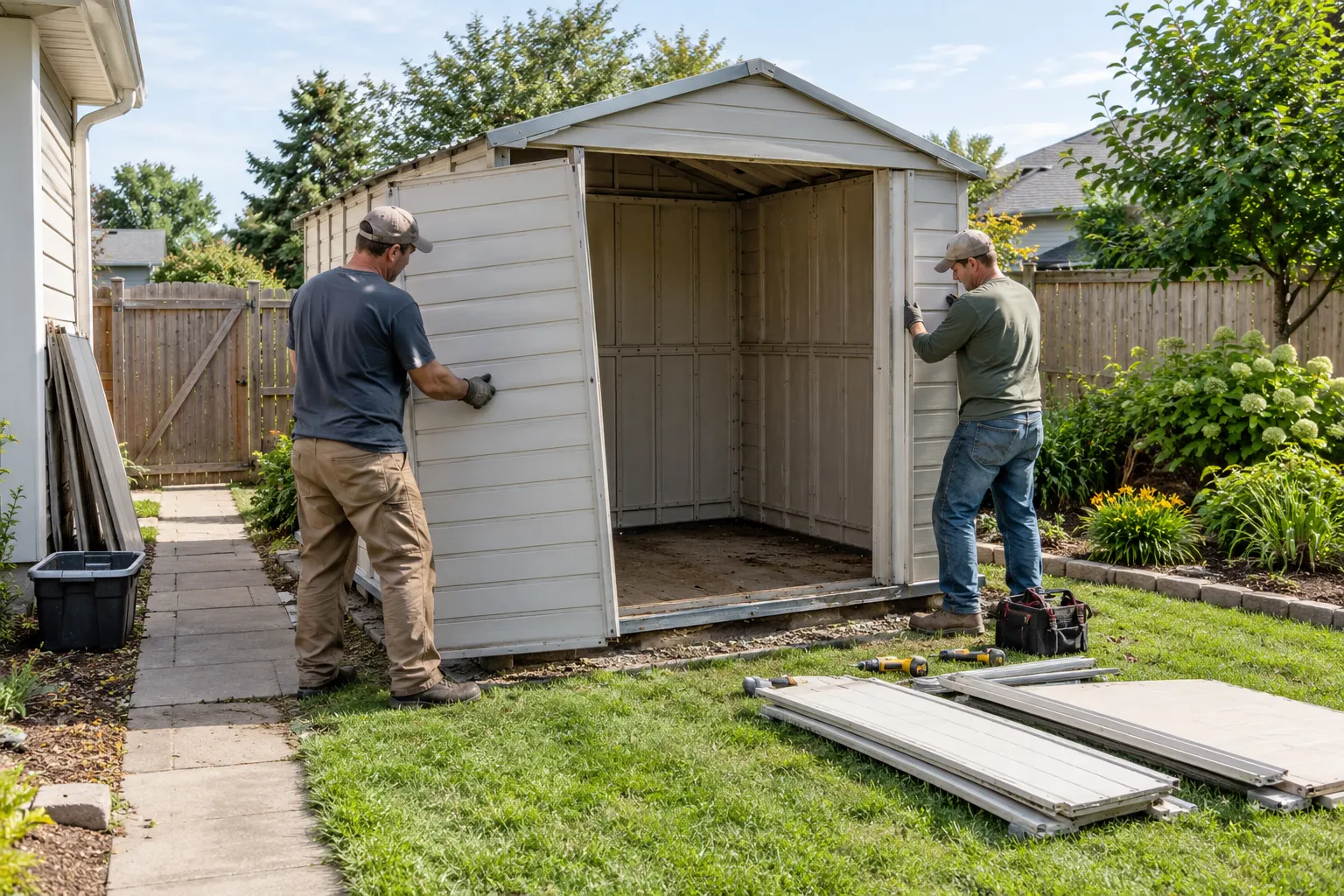
Arrival checklist: empty contents; photograph the roof, base, interior, and access route; measure the narrowest gate; flag power or plumbing; move vehicles and pets.
Empty the shed before the appointment
Remove tools, lawn equipment, fuel cans, chemicals, batteries, propane cylinders, and personal items. A clear interior lets the crew see the floor, anchors, wiring, and weak spots. If something is too heavy to move, photograph it and mention it during the estimate.
Open a usable path
Walk the route from the shed to the street or driveway. Unlock gates, trim back branches that close off the path, move vehicles, and note steps or soft ground. Measure the narrowest gate if large panels may need to pass through it.
Identify connected services
Do not assume an old shed has no power. Look for conduit, extension wiring, solar equipment, water lines, or irrigation controls. A qualified trade may need to disconnect active service before dismantling starts.
Photograph four useful views
Take one photo from each corner, one inside view, the roof, the base, and the full path to the loading area. These pictures help explain the structure better than one close shot of a damaged wall.
Keep the work zone simple
Move pets, children’s toys, planters, and portable furniture away from the shed. Tell the crew about buried irrigation, fragile paving, septic components, or landscaping that should be protected.
